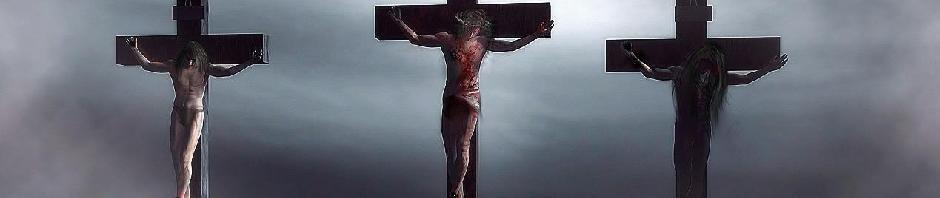
Did Jesus accept one each of gay and lesbian couples?

Bible-Thumping Liberal Jesus never mentioned homosexuality, most people say. But Ron Goetz, the Bible-Thumping Liberal, doesn’t quite agree, in a post Luke’s Gay Apocalypse: “Two Men in One Bed”:

Well, technically, he didn’t, at least not as an abstract category. But he did mention four gays and lesbians–flesh and blood, living, breathing homosexuals.

Thanks to John Meunier for the link. But is there any substance in this apparently improbable claim? Here is the passage in which Goetz finds this mention:

I tell you, on that night two people will be in one bed; one will be taken and the other left. 35 Two women will be grinding grain together; one will be taken and the other left.

Luke 17:34-35 (NIV 2011)

And I’m sorry to say that this translation already shows the weakness of Goetz’s argument. He quotes the verses from KJV, which reads “two men” where the updated NIV has “two people”, and misunderstands “men” as implying that these two people are male. Unfortunately there is nothing in the Greek text to suggest that they are. So, if we reject as Goetz does the argument that in ancient times men who were not sexual partners, and perhaps whole families, often shared beds, we end up with the conclusion that these two in one bed are what they most commonly are, at least in our culture: a married couple.

Now some might want to argue differently from the Greek text, noting that the words translated “one” and “the other” are both masculine in verse 34 (but feminine in verse 35). But that is easily explained. Jesus clearly didn’t want to specify either that the man was taken and the woman left or vice versa. So, in the Greek version of his words, the appropriate grammatical gender was used for people of unknown sex, and that is the masculine.

Sadly Goetz has been led astray in the same way as Wayne Grudem, although in a different direction. Both were brought up in the 1960s reading Bible versions, like KJV and RSV, in which the word “man” was often intended to be understood in its older gender generic sense. But both misunderstood some of these passages according to the male only sense of “man” which has dominated in English at least since those 1960s. And sadly they read their misunderstandings back into the original language Bible text, and allowed them to reinforce their very different cultural presuppositions.

Goetz does better in looking at the context, to answer the objection that his interpretation goes against it. He finds the mention of Sodom in verses 28-29, and writes:

I don’t believe the sin of Sodom was homosexuality. But there are many today who believe that it was, and I think most of the Jewish believers in Luke’s audience may have believed it as well.

Jesus knew that by recounting key details of Sodom’s destruction, his audience would have man-on-man sex on its mind.  Jesus intended for us to understand that the “two men in one bed” were gay. It is no accident that for more than a hundred years every minister preaching on the rapture from Luke 17 has had to disavow the sexual content of verse 34.

The problem here is that Goetz seems to be extrapolating this understanding of the sin of Sodom back from “today” and “for more than a hundred years” to nearly 2000 years ago, at first tentatively with “most … may have believed” and then as an unqualified assertion “Jesus knew”. But, as Joel quoted only a few days ago from Jennifer Wright Knust’s words in the New York Times,

“Sodomy” as a term for gay male sex began to be commonly used only in the 11th century and would have surprised early religious commentators. They attributed Sodom’s problems with God to many different causes, including idolatry, threats toward strangers and general lack of compassion for the downtrodden.

So I’m afraid Goetz’s case from the context looks very weak – and ironically the arguments against it come from his fellow liberal Bible scholars like Knust.

Goetz is more convincing in his follow-up posts on “Two Women Grinding Together,” part 1 and part 2, when he argues that in verse 35 the word “grind” is being used as a metaphor for lesbian sexual activity. Unfortunately he ruins his argument towards the end of part 2, when he tries to connect the Greek verb Luke uses, aletho “grind”, with letho “be unseen” and aletheia “truth”. His suggestion that aletho can be split up as a-letho and so originally meant “not be unseen” looks to me like a folk etymology. The 19th century Greek scholars Liddell and Scott were far more likely correct to see aletho as a variant of aleo, the verb for “grind” used by Plutarch as a euphemism for lesbianism.

So did Luke intend these verses to be about homosexuality? I don’t think we can rule this out completely. It seems to me unlikely that it was his main intention. But I would accept that there might have been some deliberate innuendo in his wording, to leave open the possibility that even in same-sex couples one might be taken and the other left behind. And, as I discussed concerning the parallel passage in Matthew in the first of my recent posts on the Rapture, in this case the one who is taken goes not to heaven but to God’s judgment.

That parallel in Matthew, 24:40-41, is interesting because in it there is almost no possibility of a reference to homosexuality. It is daytime, and the first two people are working together in a field, whereas, as Goetz also discusses, the two women are explicitly grinding at a mill, not Blake’s “dark satanic” variety but a hand-mill. Now I am usually rather sceptical about using source criticism in exegesis. But in the case of such a parallel between Matthew and Luke I think most source critics would hold that Matthew’s version is closer to the original version of the saying. That implies that it is closer to what Jesus really said.

So it seems highly improbable that in this saying Jesus was at all talking about homosexuals. His message is not that only one of each gay couple and one of each lesbian couple will be taken away to be judged, and the other will escape by being left behind. Rather it is to all of us, irrespective of sexual orientation. We will not escape just because our partner, at work or in the sexual sense, does, but each of us individually will face God’s judgment. And it will come at a time that

no one knows, not even the angels in heaven, nor the Son, [nor even Harold Camping!,] but only the Father.

Matthew 24:36 (NIV 2011)

Piper: Abused women should seek help from the church

John PiperSeveral bloggers, including Henry Neufeld, have linked to a short YouTube video by John Piper entitled Does a women [sic] submit to abuse? I must say I wasn’t quite as shocked as I thought I might be from some of the comments I had seen. I can accept that a woman who has committed herself to a man in marriage should endure some difficulties including minor abuse without walking out on him – and exactly the same for a man who has committed himself to his wife. I am not saying that either should endure life-threatening abuse, or submit to being required to sin, but then neither is Piper.

Piper has wise advice in the last part of the video (starting at 2:36):

If it’s not requiring her to sin but simply hurting her, then I think she endures verbal abuse for a season, and she endures perhaps being smacked one night, and then she seeks help from the church. Every time I deal with somebody in this I find the ultimate solution under God in the church, where the words “This man should be disciplined, this man should be disciplined” … She should have a safe place in the body of Christ where she goes and where the people in the church deal with it. She can’t deal with it by herself.

So the short answer I think is, the church is really crucial here, to step in, be her strength, say to this man “You can’t do this. You cannot do this. That’s not what we allow. That’s not what Christ calls you to be.” So, I can’t go into all the details, but I would say “I hope …” I would say to a woman “Come to a church that you feel safe in. Tell them the case. Let the leaders step in and help you navigate the difficulties here.”

These are good words in principle. The problem is, what if the abused woman does not feel safe in the church that she and her husband attend? What if, as Henry suggests, the abusive husband is himself one of the leaders of the church? This certainly happens. What if the church doesn’t believe her? This also certainly happens. What if the woman is so badly hurt that she cannot trust any man, and the church leadership is all male as Piper would expect?

Does Piper mean to suggest that the woman should go to the leaders of a different church? That is not bad advice – I would hope that most churches would be prepared to help and protect a woman in those circumstances. The problem is that that church would have no authority over the husband to discipline him and bring about a proper resolution. And it would still cause serious issues if the husband is church leader well known in the area.

Would the right thing for the woman be to report the matter to the authorities, as Henry suggests? In 1 Corinthians 6:1-8 Paul strongly warns believers not to take disputes between them to secular authorities. It would certainly be best if the church could deal with the matter internally, at least unless the case is so serious that the police would expect to be involved. If the church is unwilling or unable to resolve the matter, I think the abused woman would be right to look elsewhere for help. But that implies that the church is seriously failing to live up to its obligations towards its members.

The wrath of God, or the inevitable consequences of sin?

Sam Norton, an Essex vicar, has written an insightful short series of posts on the wrath of God: part 1, part 2, part 3. He starts with this seeming contradiction, and then goes on to explain it:

There are two things that I believe about wrath: that the phrase “the wrath of God” refers to something real but also that, as Julian of Norwich taught, “there is no wrath in God”.

First, he clearly distinguishes the pagan idea of sacrifice from the biblical concept. The pagan idea is that

there is an angry god who has been offended and needs to be appeased

but the biblical concept, as shown at the Day of Atonement, is that

it is God who is active, who moves towards the sinners.

Sam continues, in part 2, by showing how the idea of the wrath of God developed into the New Testament. He makes the interesting point that

In Paul for example, it is a theme in Paul’s writings, but there tends to be “wrath” rather than “the wrath of God”. Of some twenty to twenty five references to wrath, only two or three are to the wrath of God. Mostly Paul refers to wrath as a concept. …

So what is a properly Christian understanding of wrath? Wrath is when we experience the consequences of our own sin.

Now I want to inject a word of caution here. In my post The Maltese Cross, or the Christian one? I argued against the position, which I consider sub-Christian, that “justice” is some higher authority than God which can oblige God to act against his character of love. Similarly I would reject any idea that “wrath” is a separate concept which imposes obligations on God. But Sam carefully avoids that danger by explaining that wrath, in the sense of experiencing the proper consequences of ones actions, is part of the consistent order of the universe which God created.

Sam continues in part 3 by suggesting that there is a human tendency to set up idols and to make pagan type sacrifices to them. This is true even today:

If the governing idol is Mammon, then the scapegoated minority will be the poor, who will be described as deserving their poverty due to some moral failing, such as laziness.

Thus Sam concludes:

Wrath is first and foremost about when we go against the natural order and suffer as a consequence, but it is also about the nature of who we are as a human society when we are fallen. If we do not focus our human society on the Living God then we will end up having this process of scapegoating and sacrifice repeating itself for ever.

This is an important contribution to a debate in which Christians have become increasingly polarised, in which an important figure like John Piper has apparently written off as non-Christian another, Rob Bell, on the basis of mere rumours that he is not sound on the matter of hell. See this discussion of the controversy. Bell may indeed have argued

that a loving God would never sentence human souls to eternal suffering.

But Justin Taylor is wrong to conclude, without even reading Bell’s book, that this implies “full-blown hell-is-empty-everyone-gets-saved universalism”. It doesn’t. There are other real possibilities. One, with some biblical support, is that hell is populated by those who have chosen for themselves to go there. Another, and this would seem to be Sam’s position, is that people go there as the natural consequence of their sin. There is room for proper debate here, but not if some people prejudge others without even listening to them.

Well done, John Piper, for taking a break

As T.C. Robinson among others reports, the well-known preacher John Piper is taking an eight month break from public ministry, from 1st May until the end of the year. In his own article about this break Piper writes (Robinson quoted part of this):

… my soul, my marriage, my family, and my ministry-pattern need a reality check from the Holy Spirit. On the one hand, I love my Lord, my wife, my five children and their families first and foremost; and I love my work of preaching and writing and leading Bethlehem. …

… I see several species of pride in my soul that, while they may not rise to the level of disqualifying me for ministry, grieve me, and have taken a toll on my relationship with Noël and others who are dear to me. …

Noël and I are rock solid in our commitment to each other, and there is no whiff of unfaithfulness on either side. But, as I told the elders, “rock solid” is not always an emotionally satisfying metaphor, especially to a woman. A rock is not the best image of a woman’s tender companion. In other words, the precious garden of my home needs tending. I want to say to Noël that she is precious to me in a way that, at this point in our 41-year pilgrimage, can be said best by stepping back for a season from virtually all public commitments.

… No one in the orbit of our family and friends remains unaffected by our flaws. My prayer is that this leave will prove to be healing from the inside of my soul, through Noël’s heart, and out to our children and their families, and beyond to anyone who may have been hurt by my failures. …

Personally, I view these months as a kind of relaunch of what I hope will be the most humble, happy, fruitful five years of our 35 years at Bethlehem and 46 years of marriage.

In other words, reading between the lines, John and Noël Piper’s marriage was in trouble, not through any kind of unfaithfulness but because John’s heavy ministry workload, compounded by his international fame, was pulling him away from his wife and not allowing him to fulfil his role properly as “a woman’s tender companion”. These are the same kinds of strains which have ended Todd Bentley’s and Benny Hinn‘s marriages, to mention two high profile examples.

I have my differences with John Piper on a number of issues. But on this one I am right with him. He has done what he apparently needed to do for the sake of his marriage. Would that others had done something similar before it was too late, before their marriage and potentially also their ministry was destroyed.

Raised with Christ: Review part 1

I thank Adrian Warnock and his publishers, Crossway, for sending me a complimentary copy for review of Adrian’s new book Raised with Christ: How the Resurrection Changes Everything. Long time readers of this blog will know that I have had many disagreements with Adrian. But I am very pleased that he has put his Bible knowledge and his sharp mind to good use in writing about the neglected subject of the resurrection and its implications.

Anyway, I had better be nice to Adrian as, in an endorsement on the cover, Mark Driscoll calls him “my friend”. I wouldn’t want to meet Mark Driscoll on a dark night after being nasty to one of his friends! 😉

I propose to review this book in a number of posts, as I read through it. So far I have read the Foreword by Terry Virgo, the Preface, and the introductory Chapter 1.

In the Preface Adrian notes that he writes “as an ordinary Christian, and not a theologian” (p.15). Indeed he writes for a popular audience. But of course that is no excuse for making theological errors. I suppose I wonder, as I start reading, how well he will do, without formal theological training, at avoiding doctrinal pitfalls. Well, I will see – and point out in this review anything serious that I find.

Here is how Adrian starts chapter 1:

“WHAT! DID JESUS COME BACK to life again?” This was the surprised reaction when a young Englishwoman heard about the resurrection of Jesus. (p.19)

It is indeed amazing that a woman, old enough to be a mother and living in a country so full of Christians, could be so ignorant of basic Christian teaching.

She hadn’t rejected the gospel. No one had ever told her about it! (p.19)

Well, indeed. But perhaps she had heard a presentation of the gospel not including the resurrection. Such presentations are produced not only by liberal Christians who have doubts about the resurrection, but also by good conservative evangelicals who strongly affirm its truth – but only when someone else brings up the subject!

See for example this version of The Bridge – A Gospel Illustration, attributed to Bill Hybels & Mark Mittelberg, which mentions Jesus “coming to earth as one of us, and dying on the cross to pay the death penalty we owed”, but not his resurrection. Someone could be taken through this presentation and told that they had become a Christian, “immediately adopted into His family as His son or daughter”, without hearing even a word about the resurrection.

Adrian continues his first chapter by explaining “HOW THIS BOOK CAME TO BE WRITTEN”:

I was asked to preach on Easter Sunday 2007. … Preachers don’t often talk about how they decide what to speak about. … I woke suddenly in the night. A simple phrase was burning in my mind: “Adrian, preach about the resurrection.” (p.21)

I must say I am amazed. In what other Christian tradition would it take a voice from God (at least that’s what Adrian implies this was) to get a preacher to choose the resurrection as his or her sermon topic for Easter Sunday? Some of us Anglicans may not have much to say on the subject, but at least it is the default theme on this one Sunday of the year. One wonders whether in New Frontiers (Adrian’s church grouping) this doctrine ever gets a mention, barring divine intervention.

Adrian goes on to consider the current state of the church, which he sees as “general decline” but with “many encouraging signs”. I would agree. I might not agree on exactly which signs are encouraging, but I do accept the one example Adrian names: Mark Driscoll’s Mars Hill Church in Seattle. However, I have a problem with how Adrian divides the churches which are attracting growing numbers of younger people into “Two distinct groups”:

One group, calling itself the “emerging church,” is willing to change everything about church to better fit in with postmodern, informal, twenty-first century culture. By some, even the message is adapted for increased appeal.

The second group, the “young, restless, and reformed,” is also willing to change many aspects of church organization, worship meetings, and the style of music. However, they seek, if anything, a more traditional message than their parents … (p.25)

It is clear that Adrian prefers the latter group. But I wonder if it is helpful to make this kind of distinction. If we leave aside those by whom “the message is adapted”, whether “for increased appeal” or just to be “more traditional”, what really is the difference between a relatively conservative “emerging church” and one like Driscoll’s Mars Hill? They would probably disagree about women in leadership, but not much else. Is this the unmentioned shibboleth which separates Adrian’s two groups?

Anyway, if Adrian is writing primarily to those who neglect the resurrection in a misguided attempt to hold to “a more traditional message than their parents”, then I can only wish him well, and hope that his readers understand that their message needs to be not so much “more traditional” as closer in its overall balance to the teaching of the New Testament.

Continued in part 2, part 3, part 4, part 5, part 6, part 7, part 8 and conclusion.

Piper tells orphans to stop whining

John Meunier, in a post Ruthless Calvinist tells orphans to stop whining, paraphrases John Piper’s “response to children who lost their fathers on Sept. 11” as:

Yes, God killed your daddy. And he’s your only ticket out of hell, so you better not get too lippy about it.

Is Meunier being fair to Piper? Read his post and make up your own mind. Don’t miss this comment in which John M adds some nuances to his own position, and links it to the issue of whether Hurricane Katrina was a punishment from God – although surprisingly he doesn’t bring in Piper’s other recent controversial comments about the Minneapolis tornado.

Presiding Bishop calls the Gospel heresy – or does she?

Kevin Sam has two posts about some words spoken by Katharine Jefferts Schori, Presiding Bishop of The Episcopal Church (TEC), the US-based body which, as I reported a few days ago, is on the verge of putting itself outside the Anglican Communion. In the first of his posts, Kevin reports on Albert Mohler’s surprise that Bishop Jefferts Schori used the word “heresy” in these words which Mohler quotes, from her speech to the General Convention of TEC:

The crisis of this moment has several parts, and like Episcopalians, particularly the ones in Mississippi, they’re all related. The overarching connection in all of these crises has to do with the great Western heresy – that we can be saved as individuals, that any of us alone can be in right relationship with God. It’s caricatured in some quarters by insisting that salvation depends on reciting a specific verbal formula about Jesus. That individualist focus is a form of idolatry, for it puts me and my words in the place that only God can occupy, at the center of existence, as the ground of being. That heresy is one reason for the theme of this Convention.

Mohler comments:

note carefully that the Bishop identified as heresy what the church —   throughout all the centuries and in every major tradition — has recognized as central to the Christian faith. The confession that “Jesus Christ is Lord” has been central to biblical Christianity from the New Testament onward. … The Presiding Bishop of the Episcopal Church finally summoned the determination to apply the word heresy — and then applied this most serious term of odious rejection to the Gospel itself.

In a second post Kevin examines Jefferts Schori’s words for himself, asking the question Was Bishop Schori really talking about the heresy of selfishness? But he doesn’t give a clear answer. Now if it is selfishness that the bishop called a heresy, I would not disagree except to concur with Mohler that

The word heresy should properly be reserved for teachings that directly reject what the Bible reveals and the Church has confessed concerning the person and work of Christ and the reality and integrity of the Trinity.

But what was it that Jefferts Schori was attacking? The key is probably in these words of hers:

That individualist focus is a form of idolatry

This suggests that her main point was about “individual” and “alone”, the idea that salvation can be found by individuals apart from a Christian community. That is indeed a distorted teaching of many Christians in the West, related especially to the ideals of rugged individualism and personal independence – not quite the same thing as selfishness. Again, while “heresy” is too strong a word, if this is what Jefferts Schori was attacking I would not want to take issue with her.

But the Presiding Bishop’s words are all too open to the interpretation which Mohler puts on them, that what she has called heresy is a concept at the heart of the gospel, the teaching originally of the prophet Joel which was quoted by the apostles Peter and Paul:

Everyone who calls on the name of the Lord will be saved.

(Joel 2:32, Acts 2:21, Romans 10:13)

If Bishop Jefferts Schori is calling heresy this biblical teaching, upheld by the church through the ages, then she is putting herself and the denomination she leads not just outside the pale of the Anglican Communion but outside the pale of historic Christianity. If this is not her intention, she needs to clarify her statement immediately. Otherwise she is simply hastening the day of TEC’s formal ejection from the Anglican Communion.

Jesus and Authority

If the “Son” is sent by the “Father,” and if the “Son” comes to do the will of the “Father,” does it not stand to reason that God wishes by this language to indicate something of the authority and submission that exists within the relationships of the members of the immanent trinity?

– Bruce Ware, quoted here (see also here).

It is the nature of the second person of the Trinity to acknowledge the authority and submit to the good pleasure of the first.

– J.I. Packer in Knowing God (1973), quoted here.

Then Jesus came to them and said, “All authority in heaven and on earth has been given to me. …”

– Matthew 28:18 (TNIV)

Therefore God exalted him to the highest place
and gave him the name that is above every name,
10 that at the name of Jesus every knee should bow,
in heaven and on earth and under the earth,
11 and every tongue acknowledge that Jesus Christ is Lord,
to the glory of God the Father.

– Philippians 2:9-11 (TNIV)

So is Jesus the one who submits to authority or the one who exercises it?

Avery Dulles (1918-2008) on Jesus' Atoning Death

Since this blog is back on the subject of why Jesus died, I thought it would be interesting to link to the views of the recently deceased Avery Dulles, a Roman Catholic cardinal described by John Hobbins as “an enthusiastic supporter of the Evangelical Catholic movement” (John’s link replaced by a more appropriate one). Michael Barber has posted an extract from Dulles’ writing which is of great relevance to the atonement debates on this blog and others.

Here is a large part of what Michael quotes from Dulles:

One person may represent another, but cannot substitute for that other except in a merely functional way. As Dorothee Sölle has brilliantly explained, substitution is the definitive exchange of reified objects, whereas representation is the provisional intervention of persons on behalf of other persons. To retain this distinction, it seems preferable to avoid speaking of “substitutionary atonement” in the case of Jesus Christ. Sölle herself proposes to speak rather of Christ the Representative…

Because there is no mechanical substitution of one person for another, the representative death of Christ does not automatically remit the guilt of sinners. The merits of Christ are not simply imputed to us by some kind of juridical fiction; rather we are truly and inwardly healed through the infusion of the grace that flows from him. We have to allow ourselves to be taken over by Christ as he stands in for us. This we do by appropriating Christ’s action on our behalf through free and personal acts of faith, hope, and loving obedience…

Does the vicarious nature of redemption mean that Jesus is punished in our place? Some authors, indulging in very powerful rhetoric, describe in lurid terms the way in which the wrath of the eternal Father was visited upon the guiltless Son, so that he felt rejected and even hated by God…

Against these views, I would insist that Jesus remained at all times the well-beloved Son, living in close communion with the Father through the incomparable grace that flooded his soul…

The advantages of the representational sacrifice theory, and the answers to the objections raised against it, may be clarified by a review of the alternative theories described at the opening of this paper. In some ways the sacrificial interpretation, as I have proposed it, resembles the first theory, that of penal substitution, but the differences are important. Both theories maintain that Jesus suffered terrible ordeals and thereby won for sinners a release from the pains they deserve. But the penal substitution theory makes it appear that God punishes the innocent in place of the guilty, thereby suggesting that God is unjust. The theory of representative headship, by contrast, looks upon Jesus as one who offered satisfaction, rather than endured punishment. These are true alternatives. As Anselm insisted, sin requires either punishment or satisfaction; satisfaction takes the place of punishment… Satisfaction is voluntarily given, whereas punishment must be coercively endured. Satisfaction, unlike punishment, can be offered by the innocent as well as by the guilty.

Punishment, as an act of justice, must be strictly proportioned to the offense, but satisfaction, as a work of love, may be superabundant. According to Thomas Aquinas, Christ “offered to God more than was required to compensate for the sin of all humanity.”

For more of this, read Michael’s post, or follow his link (which I have not done) to the whole of Dulles’ article.

What Dulles wrote seems to me to make a lot of sense. Penal substitution is sometimes seen as a mere variant of Anselm’s satisfaction model of the atonement. But Dulles makes it clear how different it is – or at least how different certain popular understandings of penal substitution are. And it is against these popular understandings that writers like Steve Chalke and Jeffrey John reacted so strongly.

But, to be fair, the position of the more careful proponents of penal substitutionary atonement, such as J.I. Packer, is not so different from that of Dulles. Packer writes:

The Trinitarian principle is that the three distinct persons within the divine unity, the Father, Son, and Holy Spirit, always work inseparably together, as in creation, so in providence and in every aspect of the work of redemption. … It was with his own will and his own love mirroring the Father’s, therefore, that he took the place of human sinners exposed to divine judgment and laid down his life as a sacrifice for them, entering fully into the state and experience of death that was due to them. Then he rose from death to reign by the Father’s appointment in the kingdom of God.

I would be surprised if Dulles would have had serious disagreement with Packer’s article.