Touch not the Lord's anointed

In the comments on my post In memory of David Wilkerson Mark D struck what I considered a rather discordant note, and an inappropriate one concerning someone dead but not yet buried, when he wrote:

Ive always liked David Wilkerson but could his speaking against Benny Hinn have something to do with his violent death? God said touch not my anointed! King David understood this truth and would not touch Saul even though he was trying to kill him!

However, there is an important point here. I don’t know exactly what David Wilkerson said about Benny Hinn. And I don’t think God would have struck him dead for it whatever it was – that isn’t how God works. Anyway, the breach between the two cannot have been too serious, for Hinn released a tribute to Wilkerson quickly after his death.

But it is indeed a wrong and dangerous thing to speak against those whom God has anointed for ministry. At least in some Pentecostal and charismatic Christian circles this wrongness and danger is often expressed in the sentence “Touch not the Lord’s anointed”.

This sentence has its origin as “Touch not mine anointed”, spoken by God, in Psalm 105:15 KJV. It is important to note that here “mine anointed” is plural, hence the NIV 2011 rendering of the verse:

Do not touch my anointed ones;
do my prophets no harm.

Psalm 105:15 (NIV 2011)

The poetic parallel suggests that “my anointed ones” here refers to prophets.

The same principle was laid down several times by David when he had the chance to kill King Saul, who was hunting him down:

The LORD forbid that I should do such a thing to my master, the LORD’s anointed, or lay my hand on him; for he is the anointed of the LORD.

1 Samuel 24:6 (NIV 2011);
see also 24:10, 26:9-11,16,23, 2 Samuel 1:14-16

1 Samuel 26:7-11: David spares Saul's lifeHere the anointed one, singular, is the king of Israel, Saul. But by this time he was a disobedient and apostate king whom God has rejected (1 Samuel 15:11,26). The Holy Spirit had left him and he was under the influence of evil spirits (16:14). And David had been anointed king in his place (16:12-13). Nevertheless that same David continued to respect Saul as the Lord’s anointed. He fled from him for his own safety (19:10), but refused to take any action against him.

Contrast what happened to the person who dared to finish off the dying Saul: David showed no hesitation in killing him (2 Samuel 1:14-16).

What applicability does this have to Christians today? Who is, or are, the Lord’s anointed who should not be touched? Commenter here Andrew Price pointed out correctly that the role of the Old Testament kings was fulfilled in Jesus, whose title “Christ” or “Messiah” means “Anointed One”. The same could be said of the role of the Old Testament anointed prophets. However, the New Testament teaches that every Christian believer, everyone in Christ, has an anointing from the Holy Spirit (1 John 2:20), is a potential prophet (1 Corinthians 14:31), and is even now reigning with Christ (Revelation 20:4 and Ephesians 2:6, as I explained these verses in a previous post).

So, I would argue, every true Christian is the Lord’s anointed, and so, according to David’s principle, others should not lay their hands on them. This doesn’t just mean not kill them: David would not even say anything negative about Saul. The Bible warns us against slander, gossip (2 Corinthians 12:20) and backbiting (Galatians 5:15), and this is the same principle in practical application.

Now there is a place for Christians to discern false teaching. If they do discern it, they should avoid listening to it. It might sometimes be appropriate to confront the false teacher personally, or to make a report to someone in authority over them. But, according to the principle which David set out, it is wrong to criticise them publicly – even if, like Saul, they have turned completely away from God’s path. If, on the other hand, they are truly ministering in the power of the Holy Spirit, to speak against their ministry is to risk the unforgiveable blasphemy against that Holy Spirit.

Thus, I would agree with Mark that it is wrong to make negative public statements about Benny Hinn and his ministry. It is equally wrong to make such statements about David Wilkerson or Todd Bentley, as Mark was quick to do, or about Rob Bell, as Adrian Warnock among others has done, or indeed about anyone who professes to be a Christian teacher. Each of these people is the Lord’s anointed. They would remain so even if they were to turn away from God to the extent that the Holy Spirit departed from them and they were under the control of evil spirits, as happened to Saul. I am not suggesting that this has happened in any of these cases. But if someone believes that this has happened to any teacher or preacher, the right response is that of David: distancing himself from the danger, and silence – and decisive action against those who do touch the Lord’s anointed.

On the other hand, David’s example shows that it is also wrong for Christians to invoke “Touch not the Lord’s anointed” to stop others criticising them. David could have claimed his own rights as the Lord’s anointed, and denounced Saul and others for “touching” him. But he never did so. While believers should not criticise their leaders, it is wrong for leaders to put themselves above criticism.

God does not break our will

Patriarch Teoctist of the Romanian Orthodox ChurchSome amazing words by the late Patriarch Theoctist (or Teoctist) of the Romanian Orthodox Church, quoted by Elizabeth Esther and reposted by Jeremy Myers:

Man has a very powerful will—so powerful that even God Himself does not break it. And by this [God] is actually showing that man is in the likeness of God. Without man’s will he could not make any progress on the way to goodness. So out of all the gifts that God grants the human being, we believe that freedom is one of the most important.

Agreed – assuming that “man” here is to be understood in a gender generic sense. I cannot accept the Calvinist position that men and women cannot resist the grace of God, because if God forced them to accept it he would be taking away their humanity and their image of God.

The problem is that the human will is so often opposed to the will of God. That, fundamentally, is why there is so much evil and suffering in the world. Don’t blame God, blame men and women who ignore his instructions and warnings.

And that is why in the end I disagree with what Rob Bell is supposed to have said, that hell will be empty. It won’t be because that is where some people will choose to go. Even if they were to have an eternity of chances to repent, many would not take them, as C.S. Lewis memorably put forward in The Great Divorce. It is not that God is a “vicious tormenter” who wants to send people to hell, but that he allows people to go to hell if that is what they want.

God isn't a "vicious tormenter": Rob Bell's blasphemy?

I started to watch and review the video of Adrian Warnock’s interview with Rob Bell.

Premier Christian Radio: The 'Heaven and Hell' DebateThe part I have seen so far shows the reasonable face of Adrian who has “no intention to be hateful to [Bell] or to anyone”, a brother in Christ who shares with me a passion for the Resurrection and the work of the Holy Spirit.

But then I read Adrian’s follow-up post Heaven, Hell, and Rob Bell – How DARE you question God?, and suddenly I saw, or read, a completely different Adrian: one who responds with “How DARE you?” to anyone who questions the received “Reformed” concept of God, a person showing hate and condemnation for anyone who doesn’t preach a God of hate and condemnation.

Adrian quotes some passages from Rob Bell’s book Love Wins which he describes as “verging on blasphemy”. Here is the main one:

Millions have been taught that if they don’t believe, if they don’t accept in the right way, that is, the way the person telling them the gospel does, and they were hit by a car and died later that same day, God would have no choice but to punish them forever in conscious torment in hell. God would, in essence, become a fundamentally different being to them in that moment of death, a different being to them forever. A loving heavenly father who will go to extraordinary lengths to have a relationship with them would, in the blink of an eye, become a cruel, mean, vicious tormenter who would ensure that they had no escape from an endless future of agony. If there was an earthly father who was like that, we would call the authorities. If there was an actual human dad who was that volatile, we would contact child protection services immediately. If God can switch gears like that, switch entire modes of being that quickly, that raises a thousand questions about whether a being like this could ever be trusted, let alone be good. Loving one moment, vicious the next. Kind and compassionate, only to become cruel and relentless in the blink of an eye. Does God become somebody totally different the moment you die? That kind of God is simply devastating. Psychologically crushing. We can’t bear it. No one can.

And that is the secret deep in the heart of many people, especially Christians: they don’t love God. They can’t, because the God they’ve been presented with and taught about can’t be loved. That God is terrifying and traumatizing and unbearable.

So, Adrian, if you reject these words of Rob Bell as “verging on blasphemy”, can we take it that for you God does indeed “become a cruel, mean, vicious tormenter. … Kind and compassionate, only to become cruel and relentless in the blink of an eye”? Is this the kind of God you believe in? If so, how can you profess to love him? Or has Bell hit the nail a bit too much on the head about Christians who “don’t love God. They can’t, because the God they’ve been presented with and taught about can’t be loved. That God is terrifying and traumatizing and unbearable”?

As I wrote in a comment on Adrian’s post (and I credit him with allowing the comment to stand):

Do you love [God], or do you actually hate and fear him, and protest your love out of fear that he might damn you for not loving him? If so I don’t want anything to do with your God.

But this is the same Adrian whose book Raised with Christ I described last year as

well argued and positive … I would thoroughly recommend this book to anyone whose background is “Reformed” or conservative evangelical and whose faith seems to be somewhat doctrine-centred and dry.

Why do we see such a different Adrian in his new post? The only way I can explain this sudden complete changes of his attitude is that he is suffering from something like dissociative identity disorder, the PC name for a split personality. And he has shaped his God to have a similar disorder, “Loving one moment, vicious the next”. He should see a psychiatrist. Oh, he is one!

William Blake's "Jerusalem": a Christian hymn?

The preface to "Milton" by William Blake, with the words of "Jerusalem"One of the hymns at this morning’s Royal Wedding was “Jerusalem”, William Blake’s c. 1808 poem “And did those feet in ancient time” as set to music by Sir Hubert Parry in 1916. This is certainly magnificent music, all the more so when sung in a packed Westminster Abbey as part of a great state occasion. But is it a Christian hymn suitable for use in Christian worship?

The illustration shows the words as originally penned by Blake, followed by the interesting Bible verse

Would to God that all the Lord’s people were Prophets. (Numbers 11:29)

Here are the words as sung this morning, taken from Archbishop Cranmer’s posting of the Royal Wedding order of service:

AND did those feet in ancient time
walk upon England’s mountains green?
And was the holy Lamb of God
on England’s pleasant pastures seen?
And did the countenance divine
shine forth upon our clouded hills?
And was Jerusalem builded here
among those dark satanic mills?

Bring me my bow of burning gold!
Bring me my arrows of desire!
Bring me my spear! O clouds, unfold!
Bring me my chariot of fire!
I will not cease from mental fight,
nor shall my sword sleep in my hand,
till we have built Jerusalem
in England’s green and pleasant land.

Now I think we have to agree that the first verse is based on an unhistorical legend. The historical Jesus never visited England, and certainly never established here anything like Jerusalem. Yet there is also a truth here: Jesus came to England by his Spirit through his church, and the church made a start on its task of building the city of God here.

This leads into the second verse, in which Blake seems to recognise that Jerusalem will be built “in England’s green and pleasant land” only by the efforts of Christian people like Blake himself. But for those efforts to be successful heavenly weapons are required.

Surely Blake was spot on here in sharing the Christian aspiration to build the new Jerusalem, the city of God, in England and in every other country. As I have been arguing in my recent posts on the last things like this one, the task of the church is not to wait around to be taken out of this world but rather to transform this world into God’s kingdom.

So, I would conclude, this is a wonderful poem and expression of Christian aspirations. The musical setting is magnificent. It is an appropriate part of a ceremony in which a Christian couple set out on a life together hopefully to serve God and build his kingdom in England.

But is it a hymn? No, strictly speaking, because a hymn is a song of praise. In fact by this definition many of the songs used in current Christian worship, traditional and modern, are not hymns. “Jerusalem” is not a song of praise, but a song of commitment to serving God’s purposes. We can only hope and pray that William and Catherine have genuinely committed themselves to this and will have the strength to live it out.

In memory of David Wilkerson

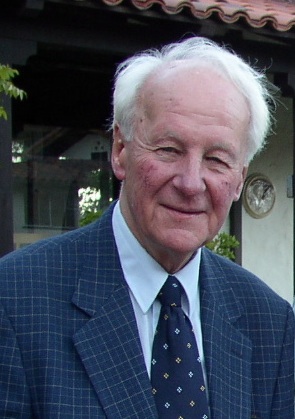
David WilkersonI was sad to read this morning of the death of David Wilkerson, founder of Times Square Church in New York, although I can also rejoice that he is in a better place. He was killed in a road accident in Texas, aged 79. His wife Gwen was with him and was critically injured. For more details see the articles by Charisma News and CBN. See also the thoughtful post by UK Methodist minister David Faulkner, who writes:

His life and ministry impacted millions. No appeals to his supporters for the money to buy a Lear Jet, just a guy who risked his life in the violent Projects of New York to show the love of Christ to gangs led by the likes of Nicky Cruz.

Wilkerson was best known to the Christian world in general for his 1963 book The Cross and the Switchblade, the story of his work with those New York gangs. He is best known to readers of Gentle Wisdom for my post last month David Wilkerson prophecy: earthquakes in Japan and USA, which has been the most read on this blog nearly every day since it was written, and is already well on its way to being my most read post ever. Perhaps it is a blessing for David that he has been spared seeing the fulfilment of his 2009 prophecy:
There will be riots and fires in cities worldwide. There will be looting—including Times Square, New York City. What we are experiencing now is not a recession, not even a depression. We are under God’s wrath. …

Wilkerson was blogging daily devotions right up to his death, which can be found here and here. Here, from the end of his last devotion with the title When All Means Fail, are his last published words:

Beloved, God has never failed to act but in goodness and love. When all means fail—his love prevails. Hold fast to your faith. Stand fast in his Word. There is no other hope in this world.

Amen!

Happy 90th birthday, John Stott

John StottTim Chesterton, newly returned from a Lent break from blogging, has reminded the world that today is John Stott’s 90th birthday. Tim gives a moving tribute, including the story of how they met in the Canadian Arctic.

I have never met John on a personal level. I think the only time I have heard him speak was at a mission at Cambridge University. But I well remember, and still own, his 1970 book Christ the Controversialist, which, a few years before that mission, played a major part in bringing me from a nominal Christianity to a living faith.

Like Tim I disagree with Stott on some issues, but still greatly respect him as one of the major evangelical leaders of the second half of the 20th century.

Happy birthday, Uncle John!

Rob Bell: Resurrection video

Just got back from our Easter evening service at Oasis Warrington. As part of the sermon there was featured this video of Rob Bell talking about the Resurrection:

All very right-brained, but nothing unorthodox as far as I can tell. It was followed by a very orthodox appeal for people to give their lives to Jesus, not to avoid going to hell but to enjoy the full benefits of the eternal life God has promised.

Not Good Friday but Good Thursday?

The death of Jesus from "The Passion of the Christ"Jeremy Myers puts forward The Case for a Thursday Crucifixion. If he is right, today shouldn’t be Good Friday at all, but we should have marked the death of Jesus yesterday, or on an earlier Thursday in April.

Jeremy’s theory makes some sense, especially of the statements that Jesus’ body was in the tomb “three days and three nights”, which even with ancient ways of counting doesn’t work for the traditional 36 hours from the burial to the Resurrection. This requires that the day after the crucifixion was not a regular sabbath but a special day of rest for the Passover, as clearly stated in John 19:31, which in this case was on a Friday.

Jeremy’s scheme requires that the Last Supper was on the Wednesday. Oddly enough Jeremy wrote this on the very day of publication of Colin Humphreys’ book The Mystery of the Last Supper, in which Humphreys also puts forward the claim that the Last Supper was on a Wednesday. I now don’t really think that this book is an April Fool. But Humphreys does not agree with Jeremy on the day of the crucifixion; one of his arguments is that the trial of Jesus needed more than one night. Also Jeremy makes no reference to Humphreys’ work. So I think it is coincidental that both are suggesting a Wednesday Last Supper on the same day – ironically, the traditional Thursday of the Last Supper.

If the Last Supper was on Wednesday 1st April 33, Humphreys’ proposal, the Passover date on the official Jewish calendar would have been on the Saturday. This doesn’t fit with Jeremy’s theory that the “special sabbath” of John 19:31 was a Friday. So Jeremy and Humphreys may agree on the day of the week for the Last Supper, but probably not on the year. Indeed, according to the calendar given in an earlier work by Humphreys and a collaborator, there is no plausible year in which the Passover (Nisan 15) fell on a Friday. This may prove a fatal flaw in Jeremy’s idea.

These calendar issues are interesting, but I will leave it to others to look into further details.