Rapture update 1: New Zealand untouched

Christchurch cathedral after the earthquakeGood morning from England. In New Zealand it is already after 8 pm on Saturday 21st May. But there are no signs yet of the Rapture having started there at 6 pm, as predicted by Harold Camping. No reports of earthquakes or backwards-twisting tornadoes. For a suitable image I had to find one of the February earthquake in Christchurch.

Why should this be? Is there no one in the whole of New Zealand worthy of being raptured? Well, if even one of their distinguished theological professors, Tim Bulkeley, could pour scorn on the predictions of judgment day today, then that just could be the explanation.

Or perhaps the damage Down Under was so massive that no reports have reached the rest of the world? I note that Tim has not yet posted today, so perhaps, despite his scepticism, he has been taken up to heaven with his fellow Kiwis.

Or could it be that Harold Camping is wrong? If so, it is only the church that will be damaged by today’s non-events.

Entering the Kingdom like Marie Antoinette

Marie Antoinette (2006)Enough of the banter about the Rapture, now for something more serious. Yes, really. This post started out as a section of my post The Rapture: will we be clothed or naked? But there is a serious point here which I didn’t want to be lost in that not so serious post.

There is a scene in the 2006 film Marie Antoinette where the young Austrian princess leaves her home territory to enter France. The year is 1770. Before entering her new kingdom, and meeting her bridegroom who will be king, she has to leave behind all her clothes and personal possessions, even her Austrian pet dog. A French lady in waiting tells her she can have as many French dogs as she likes. But nothing Austrian is allowed in France, at least for the bride of the Dauphin who must become completely French.

Similarly, when we as Christians enter the kingdom of heaven as the bride of Christ, we have to leave everything of this world behind us, to receive new things fit for the kingdom of God. This is not so much literally about clothes, although it might include them, as about spiritual encumbrances. We can send treasure on in advance (Matthew 6:20), but we cannot take it with us.

The problem with this rather simplistic picture is that, despite what Harold Camping and other advocates of the Rapture might think, Christians do not move in one simple step, or flight, from this world into a kingdom of God in the sky. Instead, when we become followers of Jesus we start to live in two kingdoms at the same time, the old worldly kingdom over which Satan still claims to be the the prince (John 16:11), and the new kingdom of God which has been breaking into this world ever since the resurrection of Jesus.

So we have time to put aside the worldly things gradually and pick up the things of heaven. There will be no embarrassing intermediate step of nakedness. This is what is traditionally known as “sanctification”, the process by which a Christian gradually lives a more and more holy life. While we can aim to complete this process in this life, unlike John Wesley I don’t believe we will become perfectly sanctified this side of the grave, that is if we reach it before the return of Jesus.

It is only when Jesus does return that we will become perfectly holy. We will then have to put aside every last remnant of our old life. The old kingdom of the world will be destroyed and only the kingdom of God will remain. And we will be clothed again in our holy heavenly garments, our white wedding dress, as the bride of the Lamb.

Elijah was raptured without his clothes

Elijah's mantle falls from heavenI am embarrassed that I missed the clearest evidence in my post The Rapture: will we be clothed or naked?, which is from the story of Elijah. In the Bible there are only three people who were taken up into heaven alive: Enoch, Elijah and Jesus. We don’t know anything about Enoch’s clothes. Jesus had already left his earthly grave-clothes lying in the tomb when he was resurrected, and presumably what preserved his modesty during his resurrection appearances was some kind of heavenly raiment which could ascend to heaven with him.

So we are left with the story of Elijah being taken up to heaven in a whirlwind, in 2 Kings 2. This is the clearest and most detailed biblical account of any kind of rapture. And what do we read?

Elisha then picked up Elijah’s cloak that had fallen from him …

2 Kings 2:13 (NIV 2011)

So it should be more than clear that our clothes will fall off us if and when we are raptured, for others to pick up.

Presumably, since the metaphorical sense of “mantle” derives from the KJV rendering of this story, the metaphorical mantles of those who are raptured will also be available for the first to claim them. In that case, as Joel Watts is expecting to be raptured on Saturday, as I already commented on his blog I want to claim “his mantle and a double portion of his anointing”, not least so that I can overcome the attacks of enemies of Gentle Wisdom and win that #1 biblioblogger place.

The Elijah passage also gives an insight into the mechanism of the Rapture. He was taken into heaven in a whirlwind, otherwise known as a tornado. Will the earth be hit by a massive outbreak of tornadoes? Were the ones which devastated the US Bible Belt a few weeks ago God’s practice run? It seems odd to me that Harold Camping is predicting earthquakes but has not mentioned tornadoes. And in the darkness and confusion inside a tornado there won’t be much danger of anyone’s nakedness being noticed.

So be ready for tomorrow just in case, but don’t worry about clothes. To quote Jesus (out of context? who said that?),

So do not worry, saying, … ‘What shall we wear?’ … 34 Therefore do not worry about tomorrow, for tomorrow will worry about itself. …

Matthew 6:31,34 (NIV 2011)

The Rapture: will we be clothed or naked?

On Saturday the Rapture, and its associated earthquakes, may or may not sweep around the earth. Well, probably not. But already Rapture fever is sweeping around the world, and claiming among its victims bloggers in New Zealand (Tim Bulkeley), Canada (Martin Trench) and England (Archdruid Eileen, and, I suppose, myself) as well in Harold Camping’s native USA. Here in England even the secular press is falling victim, as seen in today’s edition of Metro. And in the USA the infection seems to be spreading into the academic sector (thanks to James McGrath for that link).

If you see me naked on the streets, it may or may not be because of the raptureMeanwhile, in a post which seems to suggests that Roman Catholics will miss out on the Rapture, Joel raises an interesting issue, in passing in an image caption:

If you see me naked on the streets, it may or may not be because of the rapture

The image (reproduced here) suggests that Joel expects to be raptured naked, leaving behind all his clothes and even his socks, not to mention his phone and coffee mug. But the text written over the image, Revelation 16:15, seems to suggest the opposite, that it will matter how we are dressed when the Rapture comes.

So, which is it? Will we be taken up to heaven naked or fully clothed? Should we all put on our Sunday best this Saturday to make sure we give the right impression when we land at the Pearly Gates? After all, just in case we have committed a few sins that the death of Jesus Christ was unable to atone for, maybe if we look the part we can persuade St Peter to overlook them. I jest, of course.

There do seem to be Bible passages which suggest that we will be naked when we arrive in heaven, just as Adam and Eve were in Eden:

For we brought nothing into the world, and we can take nothing out of it.

1 Timothy 6:7 (NIV 2011)

Therefore, since we are surrounded by such a great cloud …, let us throw off everything that hinders …

Hebrews 12:1 (NIV 2011)

Other passages suggest that in heaven we will be given all the clothing we need, at least to keep us going for the few months until the final end of the world:

Then each of them was given a white robe, and they were told to wait a little longer …

Revelation 6:11 (NIV 2011)

So what do we make of the verse that Joel used?

Look, I come like a thief! Blessed is the one who stays awake and remains clothed, so as not to go naked and be shamefully exposed.

Revelation 16:15 (NIV 2011)

It seems clear that we shouldn’t be wandering around naked as we wait for the Rapture. Anyway that wouldn’t be very sensible, at least here, in our cool May weather. But it probably doesn’t matter what we are wearing, as long as it is decent. It will all be left behind, perhaps in a mess as in Joel’s picture, or perhaps nicely tidied up by angels like Jesus’ graveclothes. Then before we can enter God’s kingdom and the marriage feast of the Lamb we will be clothed in our proper wedding garments (contrast Matthew 22:11-12).

Oh dear, this post has become far too serious! It is almost beginning to sound like I believe in the Rapture on Saturday!

Rapture this Saturday? I don't care!

Not 2012Harold Camping, as reported by Wikipedia, has predicted that

the Rapture … will take place on May 21, 2011 and that the end of the world as we know it will take place five months later on October 21, 2011.

Fuller details are given in a tract from Camping’s fellowship, and elsewhere. I note that this is not so much a prophecy, based on claimed divine revelation, as a prediction, based on Camping’s idiosyncratic study of the Bible. There seem to be quite a few of Camping’s followers who believe him. Not surprisingly, most other Christians, and probably all atheists, don’t.

One version of the prediction involves earthquakes, on a scale way beyond what David Wilkerson and others have prophesied:

An earthquake strong enough to shake the entire planet. … This will be a rolling earthquake that will begin with all the country around the international dateline and follow the sun around the earth on May 21, Each country in the successive date line experiencing the earthquake and the beginning of judgment around 6pm in each time zone.

Will the Rapture take place this Saturday? Possibly. Probably not. But I don’t care. If a few of Camping’s followers are no longer among us, the world will hardly notice the difference. But I might wonder if they have really been raptured, or if they have decided to disappear to avoid recriminations, or perhaps to re-enact the Jonestown suicide plot. As for the earthquakes, I have no reason to think Camping is any better at predicting them than Raffaele Bendandi.

I won’t worry if I am left behind. Indeed that is what I would prefer. I want to be around to continue to actualise the kingdom of God on earth, as Tony Campolo has today described the Christian calling. And if, as Camping predicts,

The inhabitants who survive this terrible earthquake will exist in a world of horror and chaos beyond description

then there will be all the more need for Christians to be around to minister to those who are suffering and looking for God in their distress.

Will the end of the world take place this October? Possibly. Probably not. But I want to be ready and doing God’s work whenever it does happen.

The Last Trump

No, I’m not predicting that the one announcing the end of the world will sound this Saturday:

We shall not all sleep, but we shall all be changed, 52 In a moment, in the twinkling of an eye, at the last trump: for the trumpet shall sound, and the dead shall be raised incorruptible, and we shall be changed.

1 Corinthians 15:51-52 (KJV)

Donald TrumpDonald Trump is not running for President. So we may have heard the last of Trump here in the UK, even if he continues as a US TV celebrity. As Mark Mardell of the BBC writes:

President Trump had such a ring to it, conjuring images of a blunt, irascible leader. A joy to headline writers: The Last Trump. Diamonds are Trump’s.

But we can no longer even fantasise about Donald Trump in the Oval Office.

The lunatic fringe will not be represented in the Republican race. I am, of course, talking about his hair, not his politics.

In the words of the BBC news front page, this is indeed a “disappointing blow to the world’s headline writers”. I can’t help thinking it is also a blow to President Obama: if the Republicans had selected such an opponent, he could hardly have avoid winning again next year. Even if enough diamonds had been Trump’s, not enough hearts would ever be Trump’s.

Thinking in Reality on Hell and Resurrection

The flames of the great debate on hell seem to be burning low. So, lest they are extinguished, and Rob Bell’s roasting by fundamentalists proves less than the eternal punishment they think he deserves, here is an attempt to stoke up the fire again, although not against Bell…

I just discovered the rather occasional blog Thinking in Reality, by the anonymous male Iam4Jesus. The first link I followed was to a new post Are Atheists Right About Bible Prophecy? I don’t have anything to say just at the moment about Harold Camping’s prediction of the Rapture this Saturday, beyond my general scepticism about the Rapture. But I was attracted by the title of one of the other posts at Thinking in Reality, Are there immortal worms in hell?

It turns out that this post is part of a 2009 series on hell at Thinking in Reality. And there is certainly reality in the thinking I found there. The series starts with a post Where are we going…and why are we in this hand basket? asking

Will a Loving God Punish People Forever in Hell?

and noting that the biblical answer is not exactly what many people think:

Romans 6:23 where it says, the wages of sin is death. It does not say – the wages of sin is eternal suffering….

The very idea of this Hell – eternal suffering – is actually what drives many highly intelligent people away from Christ and His love. They say that they can’t beleive in a God who would be so terribly horrific. In fact Charles Darwin, in his autobiography, wrote: “Thus disbelief crept over me at a very slow rate, but was at last complete . . . I can indeed hardly see how anyone ought to wish Christianity to be true; for if so, the plain language of the text seems to show that the men who do not believe . . . will be everlastingly punished. And this is a damnable doctrine”

I think, the problem is not that the Bible teaches this “damnable doctrine” but that men have misunderstood what the Bible actually says.

Indeed, and some women have also misunderstood it.

Detail from Dante's Hell by Bartokomeo, c.1420In the second post in the series Iam4Jesus offers A Brief History of Hell. He mentions the place of Dante’s Divine Comedy in the development of the idea, and notes that

The popular concept of hell is a mixture of small bits of Bible truth combined with pagan ideas and human imagination. … One of the reasons this concept of hell survived is because theologians believed the teaching deterred people from evil.

I will pass over part 3 to part 4, the aforementioned Are there immortal worms in hell? Here the author explains the meaning of Gehenna, the word Jesus used to refer to hell:

With the understanding that Gehenna is what it is (an acursed trash pile), we can begin to ascertain that He means simply the fire will burn until the bodies of the wicked are consumed.

The last main post in the series by Iam4Jesus is The Destruction of Soul and Body in Hell. Here he anchors his main argument in Matthew 10:28:

Jesus here explains that, when one man kills another, the resulting death is only temporary because God can raise the dead to life again. But, when God destroys one in hell (Gehenna), the resulting death is eternal. There is no resurrection from this fate, which the Bible calls “the second death.”

the wicked will be destroyed. They will not live for eternity in another place or state of everlasting anguish. They will reap their destruction in the lake of fire at the end of the age. They will be consumed virtually instantaneously by the heat of the fire and will never live again.

There is a lot more here, which I can only agree with. It is good that after a few follow-up posts Iam4Jesus moves on to the more positive topic of The Resurrection(s). And here he puts forward an interesting and surely controversial suggestion. Referring to the second, post-millennium resurrection of Revelation 20:4a, he writes:

That same verse explains, “The rest of the dead did not come to life until the thousand years were completed.” In this resurrection will others have the opportunity to receive salvation? I believe, they will be called to understand God’s truth and His plan during a period sometimes referred to as the “great white throne” judgment (verse 11). …

Those resurrected in this group have never completely understood the truth of God’s plan for Grace and Mercy that He has designed and instituted from before the beginning of time. Once we realize that the majority of all people who have ever lived have never heard God’s truth, this resurrection offers some clarity and hope to these. Rather than such people being condemned to eternal suffering, the truth of the Bible is much more comforting and encouraging. I believe that God will extend the opportunity for eternal life to everyone, possibly relatively few in this age but to billions of people in the coming second resurrection.

Now I am by no means sure that Iam4Jesus is correct on every point in his discussion. But he seems to have put forward strong arguments for two points, that hell consists of annihilation rather than eternal torment, and that there will be a second chance after death at least for those who have not clearly heard the gospel in this life. Despite the protestations of the Reformed camp, the Bible does not unambiguously teach the “damnable doctrine” rejected by Darwin.

Iam4Jesus does not say what Rob Bell seems to, that “Love Wins” to the extent that all will be saved. But he does say that God will give a fair chance to all to accept his salvation, and that the alternative is not horrific eternal torment but quick destruction by fire. I think I agree.

Hell: comparing Rob Bell with C.S. Lewis

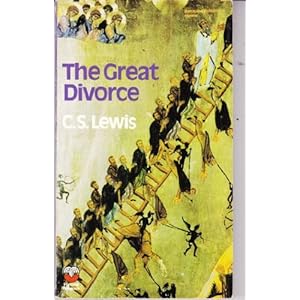
The Great Divorce - C.S. LewisPhil Whittall has posted an interesting review of “The Great Divorce” by C.S. Lewis, which leads into a comparison of Lewis’ view of hell with Rob Bell’s. I read The Great Divorce many years ago, and it is certainly a good read whatever one thinks of its theology. I have still not read Bell’s Love Wins, although I have read a lot about it.

It is interesting to see the hoops that some try to jump through to defend Lewis while condemning Bell. For example, Tim Keller, as quoted by Whittall, seems to accept that Bell teaches the same as Lewis, but suggests that Lewis was right to do so because he was going against the spirit of the age but Bell is wrong because he agrees with the spirit of the age. Leaving aside the question of whether this dubious assessment is correct, does Keller really mean to claim that whether a teaching is right or wrong depends on the spirit of the age, not on whether it agrees with biblical truth?

Whittall’s conclusions are interesting. They are basically that Bell and Lewis are teaching the same thing, that there will be chances after death for those in hell to repent and go to heaven. The main difference between the two is that Bell expects that most, or perhaps all, will take these chances, whereas Lewis expected very few to do so.

I am not at all sure about this teaching about another chance to repent. I don’t see any biblical warrant for it. But I don’t see it clearly ruled out in the Bible either, so I am open to being convinced. But I think my expectation would be more like Lewis’ than Bell’s, at least concerning those who had heard the gospel in this life. As for those who never heard it, they are not Lewis’ focus, and I haven’t read what, if anything, Bell has to say about how they might be saved.

God does not break our will

Patriarch Teoctist of the Romanian Orthodox ChurchSome amazing words by the late Patriarch Theoctist (or Teoctist) of the Romanian Orthodox Church, quoted by Elizabeth Esther and reposted by Jeremy Myers:

Man has a very powerful will—so powerful that even God Himself does not break it. And by this [God] is actually showing that man is in the likeness of God. Without man’s will he could not make any progress on the way to goodness. So out of all the gifts that God grants the human being, we believe that freedom is one of the most important.

Agreed – assuming that “man” here is to be understood in a gender generic sense. I cannot accept the Calvinist position that men and women cannot resist the grace of God, because if God forced them to accept it he would be taking away their humanity and their image of God.

The problem is that the human will is so often opposed to the will of God. That, fundamentally, is why there is so much evil and suffering in the world. Don’t blame God, blame men and women who ignore his instructions and warnings.

And that is why in the end I disagree with what Rob Bell is supposed to have said, that hell will be empty. It won’t be because that is where some people will choose to go. Even if they were to have an eternity of chances to repent, many would not take them, as C.S. Lewis memorably put forward in The Great Divorce. It is not that God is a “vicious tormenter” who wants to send people to hell, but that he allows people to go to hell if that is what they want.

William Blake's "Jerusalem": a Christian hymn?

The preface to "Milton" by William Blake, with the words of "Jerusalem"One of the hymns at this morning’s Royal Wedding was “Jerusalem”, William Blake’s c. 1808 poem “And did those feet in ancient time” as set to music by Sir Hubert Parry in 1916. This is certainly magnificent music, all the more so when sung in a packed Westminster Abbey as part of a great state occasion. But is it a Christian hymn suitable for use in Christian worship?

The illustration shows the words as originally penned by Blake, followed by the interesting Bible verse

Would to God that all the Lord’s people were Prophets. (Numbers 11:29)

Here are the words as sung this morning, taken from Archbishop Cranmer’s posting of the Royal Wedding order of service:

AND did those feet in ancient time
walk upon England’s mountains green?
And was the holy Lamb of God
on England’s pleasant pastures seen?
And did the countenance divine
shine forth upon our clouded hills?
And was Jerusalem builded here
among those dark satanic mills?

Bring me my bow of burning gold!
Bring me my arrows of desire!
Bring me my spear! O clouds, unfold!
Bring me my chariot of fire!
I will not cease from mental fight,
nor shall my sword sleep in my hand,
till we have built Jerusalem
in England’s green and pleasant land.

Now I think we have to agree that the first verse is based on an unhistorical legend. The historical Jesus never visited England, and certainly never established here anything like Jerusalem. Yet there is also a truth here: Jesus came to England by his Spirit through his church, and the church made a start on its task of building the city of God here.

This leads into the second verse, in which Blake seems to recognise that Jerusalem will be built “in England’s green and pleasant land” only by the efforts of Christian people like Blake himself. But for those efforts to be successful heavenly weapons are required.

Surely Blake was spot on here in sharing the Christian aspiration to build the new Jerusalem, the city of God, in England and in every other country. As I have been arguing in my recent posts on the last things like this one, the task of the church is not to wait around to be taken out of this world but rather to transform this world into God’s kingdom.

So, I would conclude, this is a wonderful poem and expression of Christian aspirations. The musical setting is magnificent. It is an appropriate part of a ceremony in which a Christian couple set out on a life together hopefully to serve God and build his kingdom in England.

But is it a hymn? No, strictly speaking, because a hymn is a song of praise. In fact by this definition many of the songs used in current Christian worship, traditional and modern, are not hymns. “Jerusalem” is not a song of praise, but a song of commitment to serving God’s purposes. We can only hope and pray that William and Catherine have genuinely committed themselves to this and will have the strength to live it out.